Celebrating 100 Years of the Leica I in Wetzlar
There is something you must know about me: I am not a photographer. I have no idea what an aperture is and I will undoubtedly equate everything you tell me about a specific camera to what my iPhone can do. This is just how it is. But earlier this summer, while in Germany to celebrate the centenary of the Leica I, I found myself equal parts humbled and educated on the sheer passion photographers have for their craft.
In some ways, my invitation to Leica’s HQ was a bit like Willy Wonka’s Golden Ticket. In the U.S., only four journalists attended the events — myself being one of them. And while you may be confused why the hell I got the invite…don’t worry, dear Reader, I was, too.
Sure, I’ve always liked the idea of photography and I’m drawn to the analogue world that a point-and-shoot camera can draw up. I have a few Slim Aarons prints in my writing studio and a pile of photography books I’ve never flipped through in my life, but I like knowing I could, if the mood were to strike. So when I accepted my invitation, I was under the (very mistaken) pretense that I could walk the walk as much as I’ve talked the talk now and then.

Photo courtesy Leica
But when you find yourself surrounded by 800 professional photographers, everything is a little clearer. I was out of my element, out of my league, and tried desperately to get an education on Leicas — and fast. It’s one thing to feel like a fraud, but it’s another thing entirely to let others in on my little secret. Unfortunately, I never did master the Leica Q3 43 that I was loaned for the trip (and below you can see the test photos I took were…not great). But what I squandered in talent I made up for in something else: a deep appreciation for the community Leica has built over the last 100 years.
A Brief History of the Leica I
For even one with a passing interest in photography, the name Leica will surely be recognizable. A cut above its competitors in the market, Leica has long built a reputation for its craftsmanship, engineering, and Bauhaus-inspired design. That legacy began with the Leica I, the first 35mm camera to be made commercially available.

A rare “0-series” prototype of what would become the Leica I. Photo courtesy Leica.
Instead of the big, clunky tripod cameras that came before, Leica introduced portability to the mass market — an innovation that helped democratize the artform. Suddenly, the way we viewed the world began to change: people could now experience, almost firsthand, the life of someone else through photography. It was no longer confined to the studio, but became a living, breathing thing unto itself. And it all began in Wetzlar, just a century before I myself arrived in the central German city one June day.
Point and Sh—Wait, What Am I Doing?
Being surrounded by so many enthusiasts was, in itself, a surreal experience. The closest approximation was when I went to France for the first time, with only a conversational understanding of the language. Sure, I could recognize the words they were saying to me, but when it was my turn to respond, I’d smile shyly and try to change the subject quickly. Luckily for me, “Huh?” is fairly universal.
On bus rides, at dinner receptions, and during auctions (where a, ahem, six million euro camera was purchased), I watched as my fellow travelers shared tips, tricks, and snapped shots so effortlessly among one another. I tried myself to emulate their nonchalance when walking alone around Altstadt, Wetzlar, where I was left to my own devices for a couple hours to explore. Unfortunately, I soon realized that the nonchalance of a professional is achieved through years of measured practice and confidence — two things I sorely lacked. The resulting photos of buildings and flowers were blurry and at times reminiscent of my ex-boyfriends’ “portfolios” they would upload to Geocities when applying to the Art Institute of Pittsburgh (for reference, I had three exes who did this…I definitely had a type).

Partially in-focus photo by Brett Braley-Palko
Instead of being inspired by the Q3 43, I became fearful of it. It was no longer a camera, which showed me an outward world, it was a mirror, reflecting my own insecurities about myself. I felt like I simply couldn’t grasp the technicalities, even after asking a member of the Leica team for a refresher one morning over Kaffee und Aufschnitt during breakfast. I was so nervous around it, I never even tried the digital zoom (which is why, you’ll see, every photo is just slightly out of scale).
This experience brought home something I’d heard from photographers before but hadn’t fully appreciated: getting comfortable with any camera takes time (or, at the very least, more than 5 days on a press trip). You can’t just pick up a new gadget and expect to master its features instantly, and especially on a camera like a Q3. And while I never could shake the awkwardness of taking a photo with this camera, nor did I build up that instinctive feeling of “Oh! This is going to be a great shot!”, I did get to appreciate the idea that a camera, for better or worse, is an extension of yourself.

Photo by Brett Braley-Palko
And so, like trigonometry and soccer, I decided it was best to quit before I could embarrass myself further. And, in doing so, I became an observer who wore his Leica Q3 43 (a $6,000, 4-star rated camera, mind you) as a necklace. And in my own insecurity, I relied on others to fill in the blanks for what I was missing.
A Brand Built on Community
Luckily, I didn’t have to look too hard to find a photographer eager to share his or her knowledge. By the second day, I no longer had the feeling of a tourist or a detached observer, I was a participant in the celebrations, I told myself, and God damn it, and I better start acting like it.
In speaking with attendees of the Leica I centenary event, the concept of community bubbled to the surface of conversation over and over again. This should come as no surprise. Like the watch world, hobbyists are easily converted into loyalists once they find a brand that checks all of their boxes, so to speak. And the beauty of Leica, it seems, is they continually check every box. Whether it was the visual clarity of the Elmarit 28mm lens or the cult status of the M-series, the entry point for photographers into the world of Leica can be met at nearly every level of the brand offering (and let’s not forget: they also produce watches, laser projectors, and even binoculars).
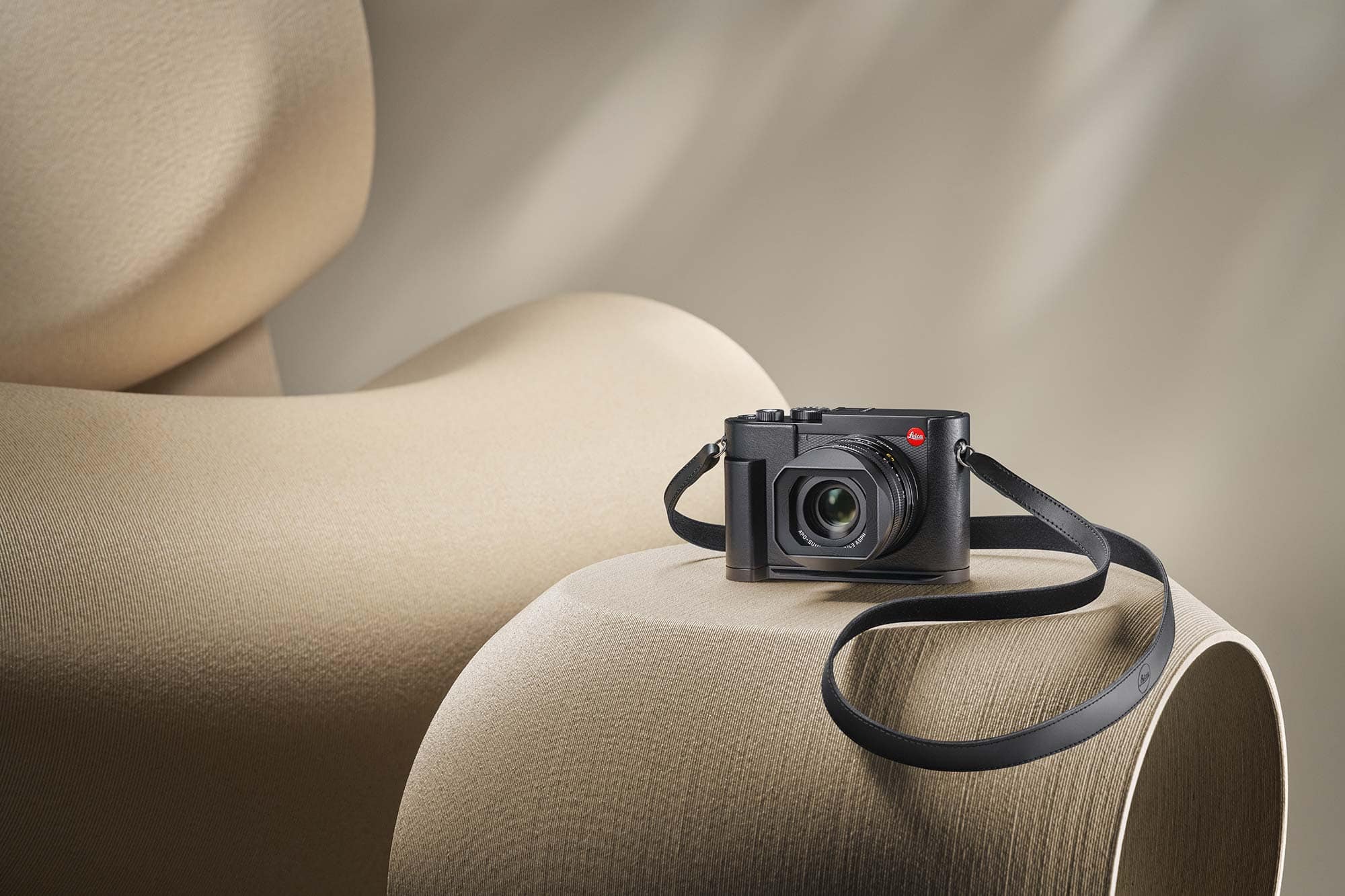
The Q3 43
And with each of these products, and the people who own them, there is a shared sentiment that there’s no need to settle when there’s something better. I heard again and again that a photographer would rather have a Leica second-hand and a few years older than a brand-new camera from a competitor. There’s something to be said about the pride of ownership when it comes to a Leica, not just for the object itself, but for what it represents: craft, history, community. And for the 800 photographers I spent the week with, that pride was unmistakable. It was never just about the camera in their hands, but about knowing that settling for less simply isn’t an option.
As for me? I never did manage to take a decent photo on that damn loaner, but I walked away with a new appreciation for a brand that feels as innovative today as it did 100 years ago. Leica
The post Celebrating 100 Years of the Leica I in Wetzlar appeared first on Worn & Wound.
from Worn & Wound https://ift.tt/3xCzYk9


Comments
Post a Comment