Five Underrated Watches Under $5,000
There’s a universal appeal to the idea of the hidden gem. Whether it’s a watch, a movie, or a vacation destination, we all enjoy reveling in the underrated to some extent. It’s part of that sense of discovery that draws us to an enthusiast pursuit in the first place. As the watch world, and enthusiasm around the hobby grows, it gets harder to identify watches that are truly underrated – every watch seems to have its moment in the sun.
We thought it would be fun to identify a handful of watches that feel genuinely underrated at this particular moment, all under $5,000. Let us know your picks in the comments!
Zach Kazan – Tudor Black Bay P01
It was surprisingly challenging for me to think of the right underrated watch to discuss here. One of the problems with the way we talk about watches in 2025 is that everything, from the most mundane, black dialed diver, to highly experimental haute horlology, is heaped with praise. It’s not that the praise isn’t always warranted – there are a lot of great watches out there – but the inverse of this question, the most overrated watches on the market, would probably be a little easier to respond to. But, in the interest of keeping things positive, we thought, for now, we’d try to shine a light on some watches that don’t get enough attention.
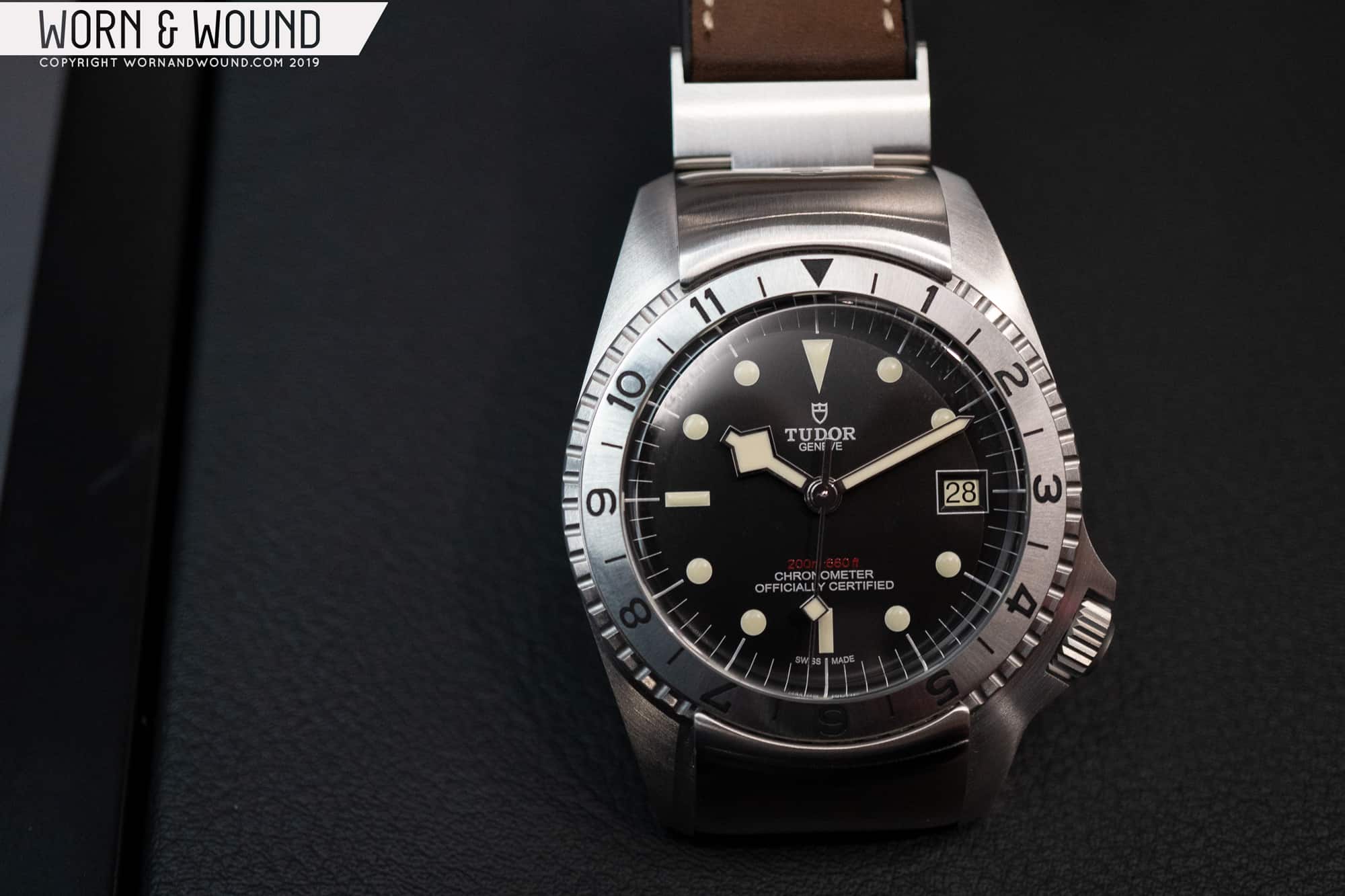
Usually when we’re creating a group oriented list like this, my mind immediately goes to the independents. You could say I’m always trying to highlight the underrated stuff, or at least make sure that indies get a mention. I took a slightly different approach here, though. To find something underrated, from my perspective, it makes more sense to start with the big brands that make a huge variety of watches. There’s always something cool or interesting that sits under the radar of a brand’s big sellers. That’s how I arrived at the Tudor Black Bay P01.
I will never forget the dialogue in the watch world when this thing debuted. People hated it to the point of performative personal offense. Part of the reason for that, I’ll always believe, was the marketing campaign that led up to the release of the P01, which included teasers that led the collective internet to think they were getting a new version of the Tudor Submariner. When the deeply strange P01 was unveiled, it felt like the watch community equivalent of riots in the streets. What was this unusual looking diver with the weird lugs and bezel locking system? And why was Tudor trying to tell us it was a Black Bay?
I didn’t always love the P01 (and even today, that’s a strong word) but I remember thinking at the time that it represented my favorite side of the Tudor, the one that’s experimental, a “skunk-works” version of Rolex that is not nearly as risk averse their higher end sister brand. For a time, it seemed like that’s what Tudor might be, in a meaningful way, as we headed into the 2020s. It turns out, not so much. We got a silver Black Bay 58, but other than that, the truly strange watches haven’t really materialized. If the original Pelagos FXD were a one-off, we might look at that watch in a similar way, but it’s become a collection unto itself, making it more pedestrian in the process.
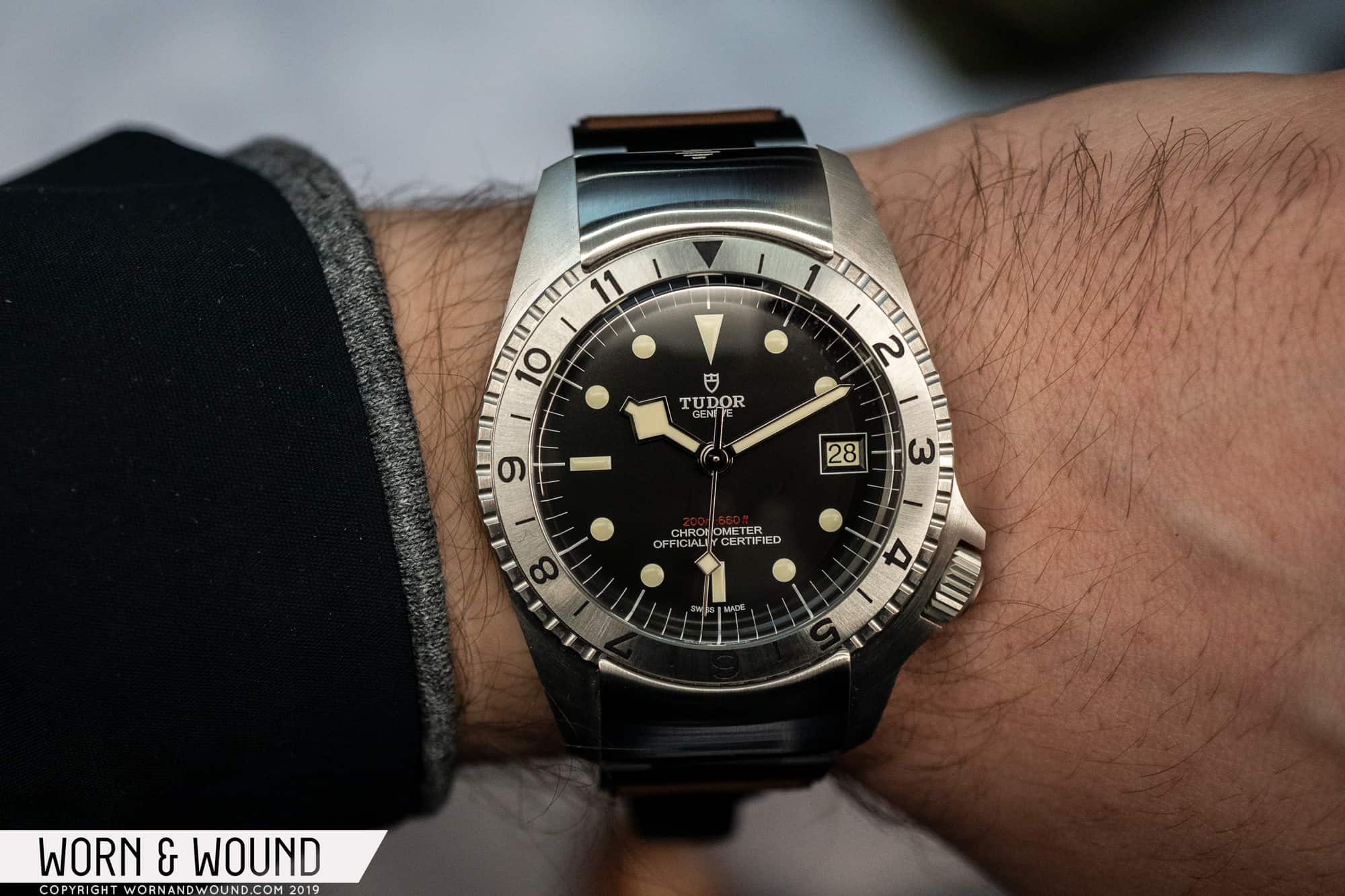
I’m not just picking the P01 because it’s some weird, nearly forgotten Tudor, though. As anyone who has spent any time with this watch understands, it’s actually pretty good! It wears like nothing else, but isn’t nearly as ridiculous on the wrist as its dimensions would suggest, and of course it has the build quality and fit and finish that we expect from Tudor, which is to say that’s of a very high quality. Is it the one and only Black Bay to own? No, probably not. But it’s a lot better as a watch, and as a strange curiosity from the pre-pandemic era, than most remember.
Zach Weiss – Stowa Partitio
There are some brands that are always just there if you need them. Their catalogs don’t change often, they typically have stock, and though popular in their own right, they aren’t often making headlines. In other words, it’s easy to forget about them, even if they make great products. One such brand, and one watch therein, is Stowa and the Partitio.

A quintessential watch enthusiast brand, when Worn & Wound first got started, Stowa was part of a German-made indie scene, along with Sinn, Damasko, Laco, Nomos, and Hanhart, that we longed for. All a step up in price from where we began as collectors, they came with the promise of German quality, as well as insider cred. A heritage brand then helmed by watchmaker Jörg Schauer, they were remaking vintage designs before remaking vintage designs was cool.
Though best known for their faithful flieger models, the Partitio stands out because it embodies so many of the qualities current collectors look for in a vintage-inspired timepiece, and yet goes largely under the radar. Based on a Stowa model from the 1930s, the Partitio is classic, stylish, well-sized, well-priced, has killer typography, and somehow does not look like every other watch. Measuring 37 x 46.9 x 10.8 or 9.8mm, depending on the choice of automatic or handwound movement, it’s idyllic and was on the smaller side when other brands were still scared to go below 40mm.

Priced at 874 Euros with a decorated Sellita SW 210, which is around $1,000 as of writing, and less for the automatic version (closed caseback, not decorated), it is still a great value today. Whether as an everyday watch, a dressier piece, or just something with some vintage flavor, the Partitio should be a part of the conversation. Admittedly, Worn & Wound is no stranger to the Partitio, with our first article on the watch dating to 2014, as well as having teamed up with Stowa to create a limited edition Partitio back in 2018. So, yeah, we’re fans.
Elodie Townsend – Sinn 903
It’s no secret that I am a Sinn super fan. In my opinion, the German watchmaker is the very definition of underrated; despite their name being well-known among enthusiasts, they don’t seem to command the same name-brand recognition that Omega, Rolex, Tudor, and other big brands that benefit from recognition outside the realm of crazy watch people. I am biased, with my “daily driver” being a Sinn EZM7, but it’s a healthy bias with a lot of evidence to back it up.
With that being said, my pick today is the Sinn 903 ST II—specifically the black version. Sinn has produced a version of the watch for 46 years, but 2024 saw a revamped model that most noticeably improved the slide-rule bezel by removing the 10 o’clock crown that previously controlled it, added applied ceramic lume indices on the dial, and upped the water resistance to a hardy 200 meters. What results is a balanced design with a black and white color scheme, dotted with red accents, that is visually busy but effortlessly legible.

Sinn regularly kills it in the “overly-competent tool watch” category, and the 903 is the crown jewel of that lineup. The case diameter of 41mm seems large on paper, but wears smaller thanks to the white inner bezel ring that complements the black sunburst dial and draws the eye inwards, while the matching white chronograph subdials at 3, 6, and 9 o’clock complete the reverse-panda look. A La Joux-Perret L110 automatic mechanical movement is visible through a see-through caseback, adding a touch of luxury to an otherwise function-first watch. Pop it on a classic Sinn black leather band with red stitch accents, and you have a killer piece for the cockpit or cocktail party.

Somehow, after decades of precision engineering and design, Sinn remains an underdog in the watch world of brand heavyweights—at least here in the U.S., that is. In my opinion, while the Sinn 903 II lacks the recognition of its horological cousin the Breitling Navitimer, it’s the perfect example of the German brand’s ability to produce watches with style and tool-watch capability in equal measure.
Griffin Bartsch – Shinola Mechanic
God help me, I’m writing about Shinola. It’s stunning how many people immediately jump to Shinola when the topic of “nice” watches comes up. At least a few times a year, when I tell people I work in watches (or before that, when I told people I was into watches), someone will immediately ask either what I think of Shinola watches, or — worse — what I think of their Shinola watch. Over the years, it’s been hard to be honest. I, like most collectors and enthusiasts I know, have never held the highest opinion of Shinola or their watches.

Admittedly, they’ve done themselves no favors on this front. For a long time, their core collection has been made up of expensive quartz watches that have been aggressively fine for what they cost, and the brand’s comfort level with watches that are just plain too big — the hard-to-take-seriously $1500, 48mm, quartz Runwell chronograph springs to mind here — has done little to ingratiate them to a collector market increasingly enamored with watches at or below 40mm. Consequently, it’s unsurprising that most ‘serious’ watch enthusiasts (myself included) have tended to dismiss Shinola as a fashion and design brand not meant for us.
But good can come from anywhere, and the Shinola Mechanic is, really, very good. Priced at $1850 on a steel bracelet, $1700 in gold PVD, or $1650 in bare steel, the Mechanic is — on its surface — a pretty paint-by-numbers vintage-inspired, cushion-cased everyday watch, but it works. I first ran into the watch in person at WindUp New York last year, and I’m not afraid to admit that it was one of the relatively few watches I left the show thinking about.
On the wrist, the Mechanic is a totally reasonable 39mm, and the soft cushion case (clearly inspired by early Rolex Oyster and Panerai models) is comfortable and looks great. The dial, which does share some DNA with the Runwell, is fairly basic, but it’s also well-proportioned and well-executed, with varied and appealing colorways and a genuinely complementary handset. The watch is at its best on the bracelet, but if you want anything but the most basic black dial, that won’t be an option, which is a bit of a bummer. I’d love to see Shinola make the bracelet an option across the range.

Coming into this exercise, I was surprised by two things: The first of these is just how many watches have crept above the $5000 mark recently. It’s startling how many watches whose prices I’m used to seeing start with a three or a four now start with fives, sixes, or even sevens. The second — and happier —surprise is how many sub-$5000 watches can’t qualify as underrated. It’s awesome how many attainable brands and watches have found real acclaim as the rest of the market has inched toward inaccessibility. But there are still plenty of undiscovered gems, and watches like the Shinola Mechanic (and many of the others on this list) are a strong reminder that great watches can still come from anywhere.
Meg Tocci – Omega De Ville
Within the Omega line-up, sports watches reign supreme. Speedmasters and Seamasters abound in collections across the globe, and for good reason. They’re rooted in history and remarkably well-crafted. However, there is another line that often gets overlooked, despite being deserving of equal attention: the De Ville series. The De Ville family falls within the dress watch category of the brand’s catalogue and offers some of Omega’s most thoughtful designs and highest levels of complications – including the De Ville Tourbillon, which is currently listed on the brand’s site for over $200,000. While that that watch is well outside the pricing parameters of this exercise, a variety of De Villes can be found on the pre-owned market well under $5,000 with a little careful searching.

This De Ville can be had under $5,000
Today’s De Ville watches are grouped into the Ladymatic, Tresor, Prestige, and (aforementioned) Tourbillon lines, and each offers a slightly different design language. Combined, enthusiasts have a wide array of aesthetics from which to choose, ranging from stick indices and Roman numerals, stainless steel and precious metals, as well as many options in case diameter sizing. There really is something for everybody… as long as they can get on board with highly-polished finishing, that is.

This De Ville can NOT be had under $5,000
While Omega’s heavy-hitters are certainly deserving of the attention they receive, the intricacies of the De Ville collection warrant a shared place in the spotlight. The Speedmaster and Seamaster lines emphasize the brand’s commitment to innovation. The De Ville collection reflects an equal dedication to elegant composition. These watches highlight how a timepiece can go beyond just working as a tool – it can be a refined, artistic experience.
The post Five Underrated Watches Under $5,000 appeared first on Worn & Wound.
from Worn & Wound https://ift.tt/mM7wdUB


Comments
Post a Comment